What Does a Wedding Celebrant Actually Do? | VITA Weddings
On your wedding day, your guests will see your celebrant for about half an hour. They'll see someone welcome everyone, tell your story, guide you through your vows and announce you as a married couple.
What they won't see is everything that happened in the months before, the hour of setting up beforehand, or the paperwork that gets sent off once the confetti's been swept up. After 18 years as a celebrant, I can tell you that a lot of the job happens where nobody's watching. So here's a look behind the curtain.
The quick answer
A marriage celebrant makes sure your marriage is legal, helps you plan and write your ceremony, runs the ceremony on the day, and registers your marriage afterwards. Depending on the package, that can also include vow help, a rehearsal, sound equipment, coordinating with your other suppliers and being your MC.
Before the wedding
Getting to know you
It starts with a conversation. I want to know how you met, what you're like together and how you'd like your ceremony to feel. Some couples arrive with a Pinterest board. Others arrive with "we don't want it to be boring." Both are perfectly good starting points.
The legal paperwork
Behind every wedding there's a fair bit of paperwork. Your celebrant:
Helps you complete your Notice of Intended Marriage and makes sure it's lodged at least one month before the wedding.
Checks your identification and any documents needed, such as divorce papers if one of you has been married before.
Has you sign a declaration before the ceremony confirming there's no legal reason you can't marry.
Prepares the marriage certificates and register for signing on the day.
This is the side of the job couples don't need to think about, and I'd like to keep it that way. As a Justice of the Peace as well as a celebrant, I'm very used to getting documents right.
Writing your ceremony
This is where the listening turns into words. Depending on your package, it might involve a questionnaire, a story session, help with your vows, suggestions for readings and rituals, and a draft for you to review. Writing a ceremony that sounds natural when spoken takes more time than most people realise. It's read aloud, tweaked and read again.
Planning the logistics
Who walks in first? Where does the signing table go? Who's pressing play on the music? What's the plan if it rains? Your celebrant works through all of this with you and, where needed, with your venue, photographer and musicians.
On the wedding day
Arriving early
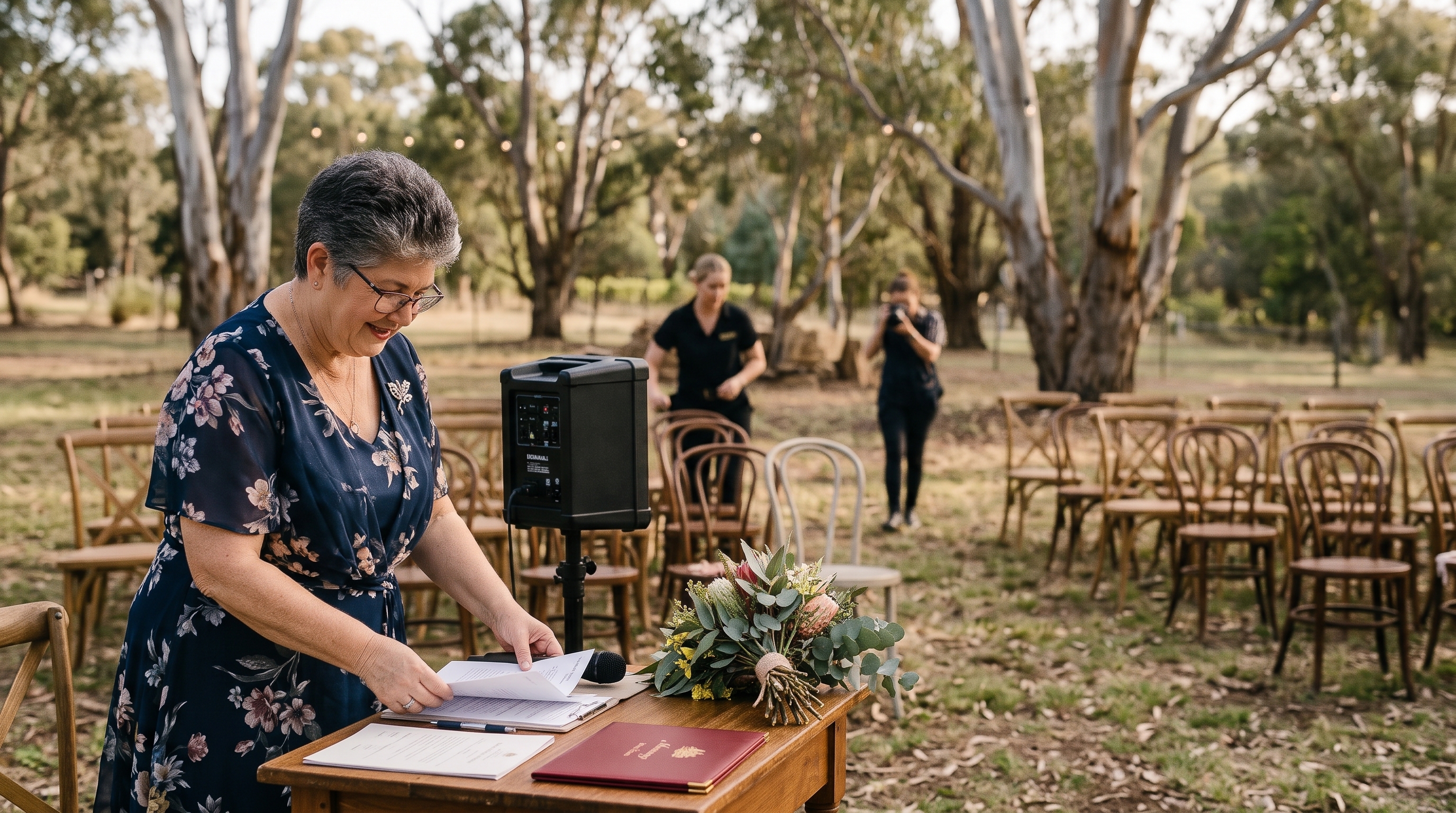
I arrive well before the ceremony starts. That time is spent setting up and testing the sound system, checking the signing table and paperwork, meeting your witnesses and anyone doing a reading, touching base with your photographer and venue, and making sure the rings are where they should be.
It also means I'm there as a calm, familiar face when nerves kick in.
Reading the room
No two ceremonies feel the same, even with a script. Part of the job is noticing what's happening and adjusting: slowing down when someone's emotional, letting a laugh run its course, giving a quiet moment the space it needs.
When things don't go to plan
The wind picks up. A flower child decides to sit in the middle of the aisle. Someone can't find the rings. These things happen, and an experienced celebrant has seen most of them before. The aim is to handle it calmly so you barely notice, or so it becomes a story you laugh about later.
The signing
After you're pronounced married, you, your two witnesses and your celebrant sign the marriage documents. You'll usually receive a presentation certificate on the day as a keepsake.
After the wedding
Registering your marriage
Within 14 days of the ceremony, your celebrant must send your marriage documents to the Registry of Births, Deaths and Marriages in the state where you married. In Queensland, that's the Queensland Registry. Once the Registry processes them, your marriage is officially registered.
Your official marriage certificate
The certificate you receive on the day is a lovely keepsake. For official purposes such as changing your name, most organisations will ask for the official marriage certificate issued by the Registry. You apply for that directly with the Registry once your marriage has been registered, and there's a fee.
I always let couples know when their paperwork has been lodged, so they know what to do next.
Common questions couples ask
What does a celebrant bring on the day? Usually the marriage paperwork, a signing table setup if needed, a PA system and microphone (depending on the package), the ceremony script, and a few just-in-case items. Ask your celebrant what's included.
What time does the celebrant arrive? Well before the ceremony starts, to allow time for setting up, sound checks and meeting the key people.
Who keeps the marriage certificate safe on the day? Your celebrant looks after the paperwork until it's signed and lodged.
What happens if our celebrant is sick? Ask your celebrant what their back-up plan is. It's a fair question to ask before booking.
How long does it take to get our official marriage certificate? It depends on Registry processing times. Check the Queensland Registry of Births, Deaths and Marriages for current timeframes.
Do we need the official certificate to change our name? Usually yes. Most organisations ask for the Registry-issued certificate.
Why it matters
You shouldn't have to think about lodgement deadlines, sound checks or where the pen is. When the behind-the-scenes work is done well, all you notice on the day is that everything felt easy, and that's how it should be.
If you'd like a celebrant who looks after the details so you can enjoy the moment, [let's talk about your wedding], or [explore my wedding packages] to see what's included.
