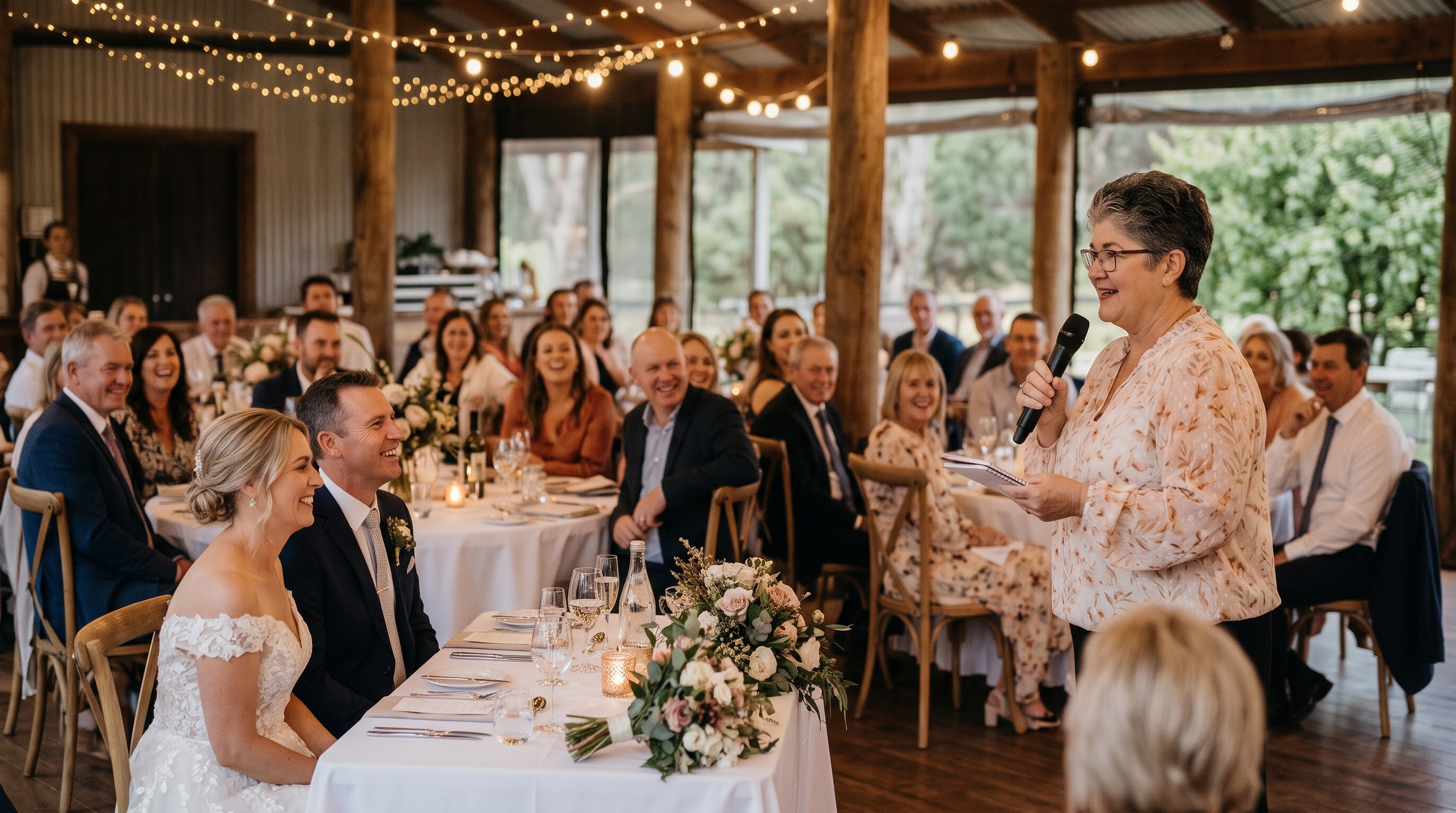
Celebrant and MC: One Person for Both Roles | VITA Weddings
You've just been pronounced married. Everyone's cheering, the photographer whisks you away, and your guests drift towards the drinks. Then, an hour or so later, someone needs to gather everyone, announce your entrance, keep the speeches on track, tell the kitchen when to serve and make sure the cake gets cut before Aunty Sue leaves.
That someone is your MC. And more couples are asking whether the person who married them could simply keep going.
The quick answer
A wedding MC (master of ceremonies) hosts your reception. They introduce you and your bridal party, run the speeches, make announcements and work with your venue and suppliers to keep the night on time.
Booking your celebrant as your MC means one person guides you from the moment you arrive at your ceremony to your farewell at the end of the night. It's one less supplier to brief, and someone who already knows your story, your family and your plans.
What does a wedding MC do?
Guests see the microphone moments. Behind those, a good MC is doing a lot more.
Before the wedding
Meets with you to plan the reception running order
Helps with timing, so the night flows without feeling rushed
Checks names, pronunciations and who's giving speeches
Helps you word announcements and introductions
Liaises with your venue, DJ or band and photographer
On the night
Welcomes guests and explains what's happening
Introduces you and your bridal party
Introduces each speaker
Announces the cake cutting, first dance and any other key moments
Keeps an eye on the timeline and adjusts when things run late
Works with venue staff so meals are served at the right time
Fills any awkward gaps (a missing speaker, a technical hiccup) so guests barely notice
The aim is simple: you and your guests enjoy the night, and nobody has to wonder what happens next.
How a wedding reception usually flows
Every reception is different, but a typical running order looks something like this:
Guests arrive. Drinks and canapés while you're having photos.
Welcome and housekeeping. The MC welcomes everyone and shares anything guests need to know.
Grand entrance. Your bridal party, then the two of you.
Entrée or first course.
Speeches. Often between courses, so guests aren't hungry or restless.
Main course.
Cake cutting.
First dance, then the dance floor opens.
Any extras you'd like: a bouquet toss, a slideshow, a surprise performance.
Farewell. A send-off arch, sparklers or a final song.
Your MC helps you shape this around your venue, your catering and what you want the night to feel like.
Introductions and speeches
This is where a confident MC makes the biggest difference.
Introductions set the energy for the room. A good MC gets names right, knows who's walking in with whom and builds a bit of excitement before you enter.
Speeches are where receptions most often run off track. A few things that help:
Agree on who's speaking and in what order. Common speakers include parents, the bridal party and the two of you, but there are no rules.
Suggest a time guide to each speaker (three to five minutes each works well).
Have the MC introduce each person with a line or two about who they are.
Make sure speakers have a microphone that works and know when they're on.
Your MC can also gently wrap things up if a speech runs long. That's much easier for a professional than for your best mate.
Why one person for both roles works
They already know you. By the wedding day, your celebrant has heard your story, met your family and knows the names and personalities in the room. That makes introductions warmer and more personal.
Continuity across the day. The same calm, familiar face guides your guests from the ceremony to the reception, so the whole day feels connected.
One less supplier. Fewer people to brief, fewer emails and one person who knows the full plan, from the processional to the last dance.
Organisation behind the warmth. Running a reception is mostly about timing and coordination. My background includes more than 20 years in administration, rostering and operations, so run sheets and keeping things on time come naturally.
You get to enjoy it. Your friends and family can relax and celebrate instead of juggling a microphone and a timeline.
What about asking a friend to MC?
Plenty of couples ask a friend or family member, and it can work well, especially if they're a confident speaker who loves organising. Just remember they'll be working rather than celebrating for much of the night, and they'll need to coordinate with your venue and suppliers.
If you'd love them involved, a speech or a reading might be a happier fit, leaving them free to enjoy the party.
Frequently Asked Questions
Do we need an MC at our wedding? Not every wedding needs one. For a reception with speeches, a formal entrance or several moving parts, an MC makes the night run much more smoothly.
What's the difference between a celebrant and an MC? Your celebrant legally marries you and runs your ceremony. Your MC hosts your reception. Some people, like me, do both.
When should we book our MC? At the same time as your celebrant if possible, especially if you'd like one person for both.
How long should wedding speeches be? Around three to five minutes each is a good guide.
What order do wedding speeches go in? There's no fixed order. Many couples have parents first, then the bridal party, then themselves. Your MC can help you decide.
Can our celebrant MC if the reception is at a different venue? Usually, yes. It's worth discussing travel time and timing when you book.
One calm voice from "I do" to the last dance
When the same person who married you is the one guiding your reception, everything feels connected. You can stop watching the clock and enjoy the night with your people.
If that sounds like you, take a look at my [Reception Emcee option] or [let's talk about your wedding].
